
The interplay between plants, hormones, and microorganisms
- Aug 18
- 1 min read
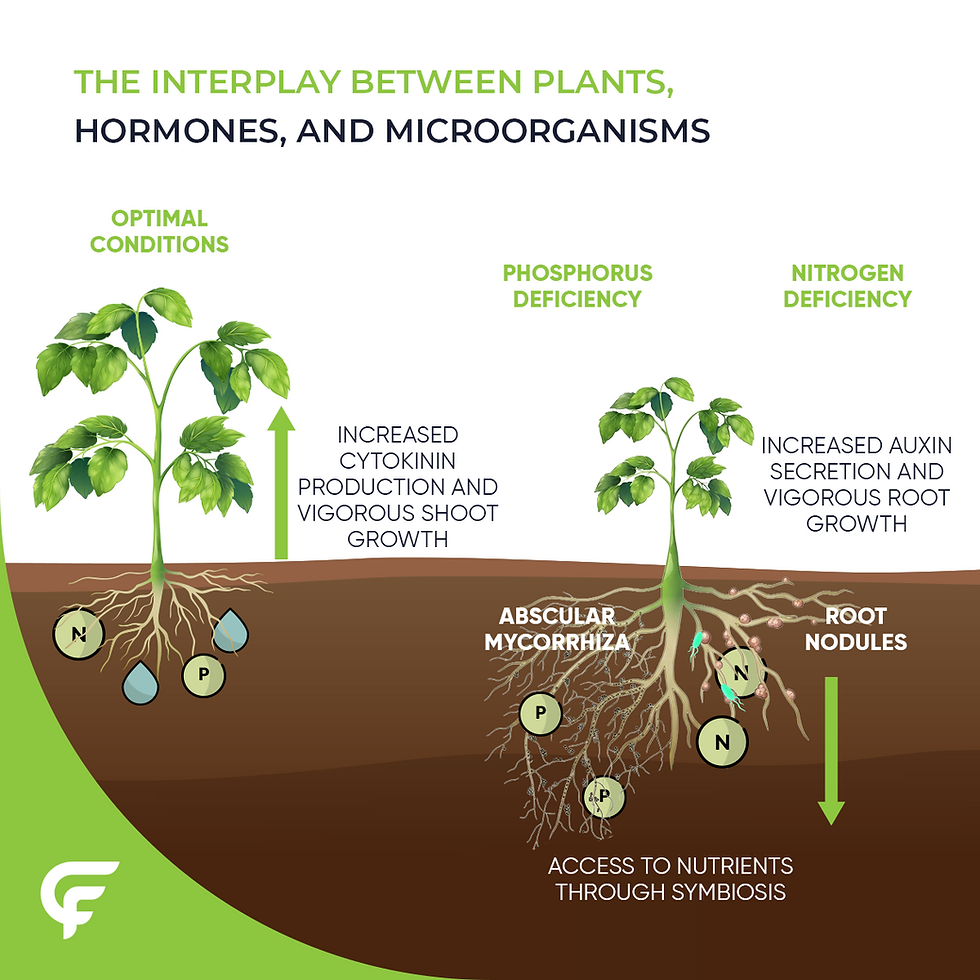
Plants possess an extraordinary ability to adapt, which involves a series of biochemical processes occurring within their cells and interactions between them and their environment.
💧 Terrestrial plants must cope with limitations imposed by their habitat, including periodic shortages of water and nutrients, temperature fluctuations, and other factors.
🧪 Plant growth is regulated by phytohormones, including cytokinins and auxins, which influence the shoot-to-root ratio, thereby shaping their adaptive capabilities.
✅ When soils are deficient in phosphorus and/or nitrogen:
auxin levels increase while cytokinin levels decrease,
the shoot-to-root ratio decreases,
roots become longer,
root nodules form (in the case of nitrogen deficiency),
arbuscular mycorrhizae form more frequently (in the case of phosphorus deficiency).
✅ Symbiosis with nitrogen-fixing bacteria (root nodules) and mycorrhizal fungi enables plants to:
acquire nutrients,
gain support in reducing pathogen pressure,
and develop strong roots.
⚖️ Under optimal conditions, auxin secretion decreases while cytokinin levels increase, which promotes better development of the aboveground parts of the plant.
🧩 Understanding the relationships between microorganisms, phytohormones, environmental stress, and the plants themselves can lead to the development of better agricultural practices.
📢 A communication network extending from the shoots to the underground allows plants to adapt to and survive in changing conditions.


Comments